
DSCR Loan Rates for LLCs in 2026: What to Expect and How to Get the Lowest Rate This Year
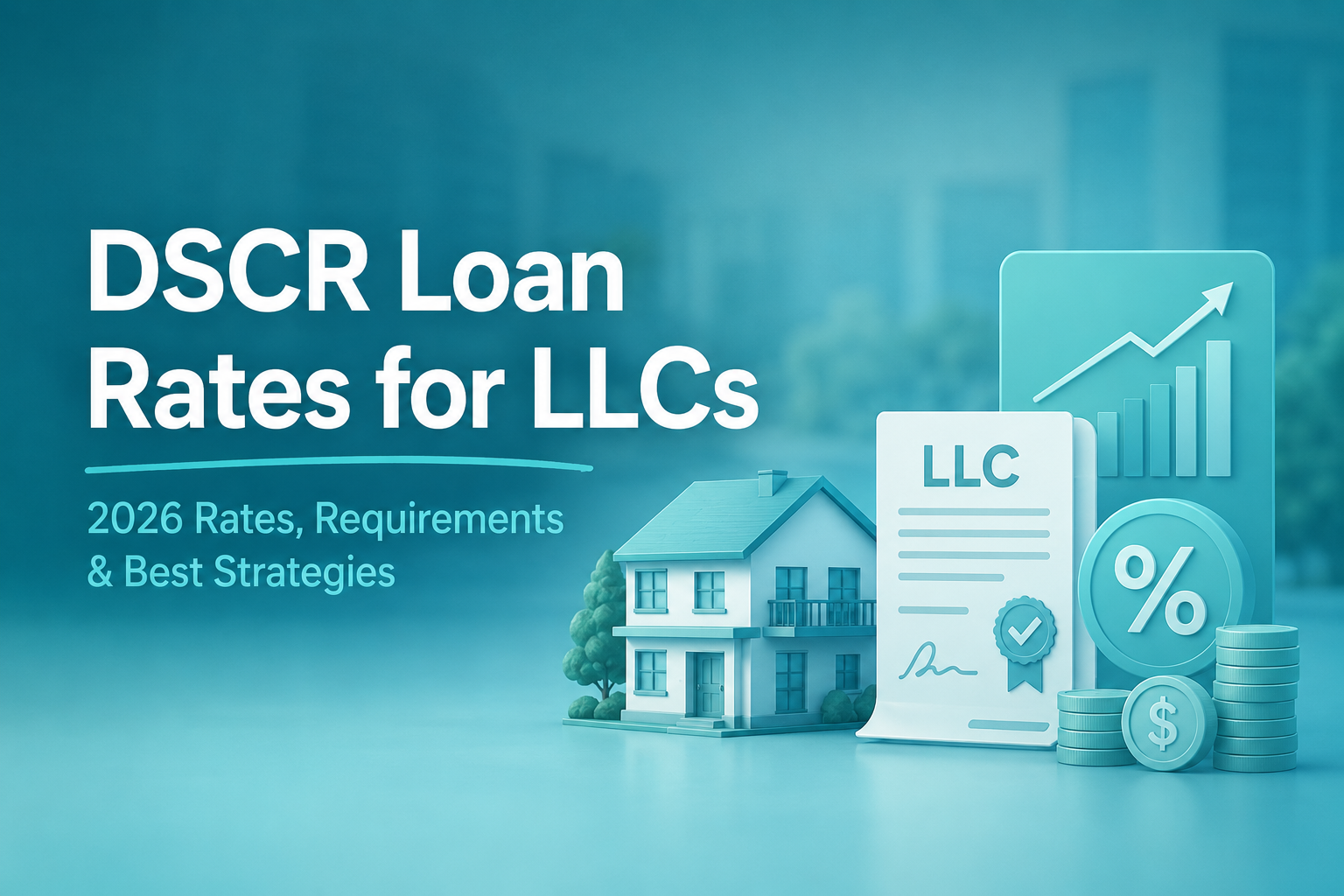
Yes, you can get a DSCR loan in the name of an LLC, and most DSCR lenders not only allow it but also actively support entity vesting for investment properties. LLC DSCR loan rates in 2026 are generally comparable to individual DSCR rates, typically ranging from 6.00% to 7.00%, though some lenders may add a small pricing adjustment for entity vesting. This article covers the exact LLC requirements, expectations for personal guarantees, rate factors, documentation checklists, and strategies to secure the lowest rate on your next deal.
For investors building a real estate portfolio, the LLC is not just a legal formality. It is the foundation of a scalable, protected investment structure. And unlike conventional mortgages, which typically do not allow LLC vesting, DSCR loans were built with investors in mind. That means closing your investment property financing in an entity is not a workaround. It is standard practice.
Looking to close a DSCR loan in your LLC? Get a rate quote from Host Financial today.
Key Takeaways
- Yes, you can get a DSCR loan in the name of an LLC, and most DSCR lenders actively support entity vesting for investment properties.
- LLC DSCR loan rates in 2026 are generally in line with individual DSCR rates, with only minor adjustments from certain lenders.
- A personal guarantee from the LLC member(s) is almost always required, even when the loan is closed in the LLC name.
- Specific LLC documents are needed for approval, including the operating agreement, articles of organization, and EIN verification.
- Strategic choices around LLC structure, credit profile, and lender selection can meaningfully lower your DSCR loan rate.
Can You Get a DSCR Loan in the Name of an LLC?
Yes, and this is one of the most important advantages DSCR loans hold over conventional financing.
Conventional mortgages typically do not allow borrowers to close and vest title in an LLC. Fannie Mae and Freddie Mac guidelines require individual ownership, which forces many investors to hold properties in their personal name and then attempt to transfer to an entity later, a process that can trigger due-on-sale clauses and create legal complications.
DSCR loans operate outside that framework entirely. Because they are non-QM products with flexible underwriting, lenders can and regularly do allow the LLC to serve as the borrower of record and the title holder. You close the DSCR loan in LLC name, the deed is recorded in the LLC’s name, and the property is held in the LLC as a rental property from day one.
This matters for three reasons investors care about most:
- Asset protection. Holding the property in an LLC separates it from your personal assets. If a tenant sues over an injury or a contract dispute, your personal bank accounts and other properties are not exposed.
- Tax flexibility. LLCs offer pass-through taxation, depreciation benefits, and cleaner separation of investment income from personal income.
- Portfolio scalability. Managing multiple properties is significantly easier when each is held in a properly structured entity.
The one thing that does not change when you close through an LLC: most lenders will still require a personal guarantee from the member(s). The loan is in the LLC name, but the individual is still on the hook for the debt.
What Are the Requirements to Qualify for a DSCR Loan Under an LLC?
DSCR loan LLC requirements are more straightforward than most investors expect. The core qualification still centers on the property’s cash flow and the guarantor’s credit profile. The LLC adds a documentation layer, but it does not fundamentally change what the lender is evaluating.
LLC Formation and Documentation Requirements
This is the checklist section you want to have ready before you apply. DSCR lenders will ask for the following:
- Articles of Organization/Formation: The formation document filed with your state when the LLC was created. This confirms the entity exists legally.
- LLC Operating Agreement: The single most scrutinized document during the process for a DSCR loan that is vesting in an LLC. It must identify the members, specify ownership percentages, and explicitly authorize the LLC to take on mortgage debt. If your operating agreement does not include borrowing authority language, have an attorney update it before you apply.
- EIN Letter: The IRS-issued Employer Identification Number confirmation for the entity. This is the LLC’s equivalent of a Social Security number.
- Certificate of Good Standing: Not required by all lenders, depending on when the LLC was formed, but many ask for it. Obtained from the state where the LLC was formed, it confirms the entity is active and in compliance. Typically needs to be dated within 90 days for the loan closing.
- Borrowing Resolution: A written authorization from the LLC members approving the specific loan. Some lenders require this as a separate document; others accept operating agreement language as sufficient.
The IRS EIN application is free and can be completed online in minutes. Having it in hand before you start the loan process eliminates one common delay.
What Credit Score Is Needed for LLC DSCR Loans?
LLCs do not have credit scores. Lenders evaluate the personal credit of the LLC member(s) acting as guarantors.
The typical minimum is 620 to 660. Scores of 720 and above unlock the best rate tiers. If the LLC has multiple members, lenders generally evaluate the credit of the primary guarantor, which is typically the member with the highest ownership percentage. When multiple members have equal ownership percentages, a DSCR lender will use the highest middle FICO score among the members for pricing purposes.
This means you can improve your LLC DSCR loan pricing the same way any individual DSCR borrower does: by working on your personal credit profile before you apply.
Can a Newly Formed LLC with No Credit History Get Approved?
Yes. Because DSCR lenders are evaluating the guarantor’s personal credit and the property’s DSCR ratio, the LLC’s age and credit history are not disqualifying factors. The LLC does not need to have been operating for years or have a business credit profile.
The fastest path to approval for a new LLC is having the EIN, operating agreement, and articles of organization ready to submit at the time of application.
DSCR Loan LLC Requirements Checklist
| Requirement | Details |
|---|---|
| LLC Formation | Articles of Organization filed with the state |
| Operating Agreement | Must authorize borrowing; show members and ownership percentages |
| EIN | IRS-issued Employer Identification Number |
| Certificate of Good Standing | Required by some lenders; obtained from state. No more than 90 days old. |
| Borrowing Resolution | Written authorization for the LLC to take on the specific loan |
| Personal Guarantee | Required from member(s), drafted by the lender, and part of the loan documents signed at closing |
| Guarantor Credit Score | Minimum 620 to 660; best rates at 720+ |
| Guarantor Reserves | Typically 2 to 12 months PITIA in liquid asset, depending on the loan size |
| Minimum DSCR Ratio | 1.00x is standard with 0.75x and No Ratio options available. Best pricing typically occurs with a 1.25x |
| Down Payment | 15% to 25% (same as individual DSCR loans) |
Do DSCR Lenders Require a Personal Guarantee When Lending to an LLC?
Nearly all of them do. This is the most important nuance investors need to understand before closing a DSCR loan in an LLC name.
When a personal guarantee is required, it means that if the LLC defaults on the loan, the lender has recourse against the guarantor personally, not just against the LLC’s assets. The guarantor’s personal bank accounts, other properties, and financial assets are on the line for the mortgage debt specifically.
What the LLC still protects you against: third-party liability. If a tenant is injured on the property and sues, or if there is a contract dispute with a vendor, the LLC structure separates those claims from your personal assets. The personal guarantee only extends lender recourse to the mortgage debt itself. It does not collapse the liability protection the LLC provides for other types of claims.
True non-recourse DSCR loans (no personal guarantee required) do exist, but they are rare. When available, they typically require larger down payments and come with meaningfully higher rates to compensate for the lender’s increased risk exposure.
For most investors, a personally guaranteed LLC loan is the right structure. You get the asset protection benefits of the LLC for everything except the loan itself, which is the primary category of liability you are managing anyway.
DSCR Loan Rates for LLC-Owned Rental Properties: What to Expect in 2026
The short version: closing your DSCR loan in an LLC name does not meaningfully increase your rate at most lenders.
DSCR loan rates for LLC-owned rental properties in 2026 generally fall in the same range as individual DSCR loans: approximately 6.00%–7.00%, depending on the guarantor’s credit score, DSCR ratio, LTV, loan size, property type, and lender. Some lenders apply a small pricing adjustment for entity vesting, but many charge no LLC premium at all.
The LLC structure itself is not the primary rate driver. What moves your rate on an investment property LLC financing deal is the same set of factors that moves any DSCR rate: how well the property cash flows, how strong your personal credit is, how much you put down, and which lender you work with.
How Title and LLC Structure Impact DSCR Loan Pricing
The way your LLC is structured affects how some lenders price and process your loan.
A single-member LLC with a clean, straightforward operating agreement is the simplest structure and typically receives the most competitive pricing. There is one guarantor, one credit file to review, and minimal title complexity.
Multi-member LLCs introduce more moving parts: multiple guarantors, multiple credit evaluations, and a more complex operating agreement. Most lenders handle this without additional rate adjustments, but the review process takes longer and requires the operating agreement to be precise about borrowing authority.
Series LLCs, LLCs owned by trusts, or LLCs that are subsidiaries of other entities can face additional scrutiny. Some lenders will not work with these structures at all. If your entity structure is complex, confirm the lender’s requirements before investing time in the application process.
DSCR Loan Rate Factors for LLC Borrowers
| Rate Factor | Impact on LLC DSCR Rate | How to Optimize |
|---|---|---|
| DSCR Ratio | Higher ratio (1.25+) = lower rate | Choose properties with strong cash flow |
| Guarantor Credit Score | 760+ gets best pricing | Improve credit before applying |
| LTV / Down Payment | Lower LTV = lower rate | Put 25% or more down if possible |
| LLC Structure | Single-member = simplest pricing | Keep entity structure clean and straightforward |
| Property Type | Long-term rental often priced better than STR | Document STR income thoroughly |
| Prepayment Penalty | Accepting a prepay penalty lowers rate | Choose a step-down penalty if planning to hold |
| Lender Selection | Rates vary significantly between lenders | Shop at least 3 to 5 DSCR lenders |
Not sure how your LLC structure affects your rate? Talk to Host Financial’s team for a clear breakdown.
Is It Better to Get a DSCR Loan in Your Personal Name or Through an LLC?
For most serious investors, the LLC is the better choice. Here is the honest comparison.
Closing in an LLC gives you:
- Asset protection from property-related lawsuits and claims
- Clean liability separation between the investment property and your personal finances
- Pass-through taxation with the ability to deduct mortgage interest, depreciation, and operating expenses directly
- A scalable structure for managing multiple properties
- Title vesting in the entity name from day one, with no need to transfer later
Closing in your personal name gives you:
- Potentially slightly lower rate at some lenders (though the difference is 0 to 0.125% at most)
- A simpler closing process with less documentation
- No entity formation or maintenance costs
The rate difference, where it exists at all, is minimal. A 0.125% rate premium on a $300,000 loan amounts to roughly $25 per month. For most investors, the asset protection and tax benefits of the LLC far outweigh that cost.
The case for a personal name is strongest for first-time investors buying a single property who are still deciding whether to build a portfolio. For anyone already committed to scaling, the LLC structure is the right long-term choice.
One important note: transferring a property from a personal name to an LLC after closing can technically trigger the due-on-sale clause in the mortgage. Lenders rarely enforce this on DSCR loans in practice, but it is an unnecessary risk. Closing in the LLC from the start eliminates the issue entirely.
DSCR Loan in LLC vs. Personal Name
| Factor | LLC | Personal Name |
|---|---|---|
| Asset Protection | Yes, liability separation | No, personal assets exposed |
| Rate Impact | Same or slightly higher (0 to 0.125%) | Baseline rate |
| Documentation | Operating agreement, EIN, articles required | Simpler, fewer documents |
| Tax Flexibility | Pass-through taxation, deduction flexibility | Standard Schedule E |
| Portfolio Scalability | Easier to manage multiple properties | Harder to organize at scale |
| Title Vesting | LLC holds title directly | Individual holds title |
| Due-on-Sale Risk | None (loan originates in LLC) | Risk if transferring to LLC post-close |
| Lender Availability | Most DSCR lenders allow | All DSCR lenders allow |
Does Closing a DSCR Loan in an LLC Protect You from Personal Liability?
Partially, and the distinction matters.
The DSCR loan asset protection LLC structure protects you from property-related third-party claims. If a tenant slips on the stairs, a contractor files a lien dispute, or a neighbor sues over a property boundary issue, the LLC separates those liabilities from your personal assets. Your personal bank accounts, other investment properties, and personal real estate are not accessible to those claimants.
What the LLC does not protect you from: the mortgage itself. Because nearly all DSCR loans require a personal guarantee, the lender has personal recourse against the guarantor if the LLC defaults. The LLC limits your exposure to external claims; it does not eliminate your obligation to the lender.
This is a nuanced but important distinction. The LLC structure is genuinely protective and worth having. It just does not create a complete shield against every form of liability. For state-specific guidance on how LLC protections apply in your jurisdiction, the Small Business Administration’s guide to LLCs provides a useful starting point, and a real estate attorney can advise on the specifics for your state.
How to Get the Lowest DSCR Rate When Borrowing in an LLC
The same levers that lower any DSCR rate work for LLC borrowers. Here is how to use each one effectively.
- Maximize your DSCR ratio. A property at 1.30 or 1.40 DSCR will be priced better than one at 1.05. Build this into your acquisition criteria, not just your underwriting review after you are already under contract.
- Increase your down payment. Going from 80% LTV to 75% LTV typically improves your rate by 0.125% to 0.25%. If your reserves allow it, this is one of the highest-return actions you can take before closing.
- Improve your personal credit before applying. The guarantor’s credit drives the rate, not the LLC’s. A 20 to 30 point improvement in your personal score before application can shift you into a meaningfully better rate tier. Pay down revolving balances, dispute any errors, and avoid opening new accounts in the months before you apply.
- Accept a prepayment penalty. Lenders offer lower rates to borrowers who commit to holding the loan for 3 to 5 years. A step-down prepayment penalty (5%, 4%, 3%, 2%, 1% by year) is standard and a smart trade-off if you plan to hold long-term.
- Keep your LLC structure simple. Single-member LLCs with clean operating agreements get the fastest and most straightforward approval. Avoid unnecessary entity chains or complex ownership structures that slow down underwriting unless that is necessary for your situation, in which case, make sure you discuss your structure with potential DSCR lenders to make sure they can accommodate you before you apply.
- Shop multiple lenders. DSCR rates vary significantly across lenders for the same profile. Get quotes from at least 3 to 5 lenders and compare total cost: rate, origination fees, prepayment structure, and points. A lender quoting 0.375% lower but charging two additional points may not be the better deal.
- Work with a lender experienced in LLC closings. Lenders who routinely close DSCR loans for LLCs move faster, ask better questions upfront, and structure deals more efficiently. That experience translates to fewer delays and, often, better pricing because the lender is confident in the process.
Host Financial specializes in DSCR loans for LLCs and can help you structure your deal for the best possible rate. See how our process works.
Negotiating DSCR Mortgage Terms When Purchasing Through an LLC
Rate is one number. The full set of loan terms has more levers than most investors use.
- Prepayment penalty structure. You can work with the lender to decide whether the penalty is a step-down (decreasing each year) or a flat percentage. Step-down structures are generally more favorable for investors who may want to refinance in year 3 or 4. Flat penalties carry more risk if your plans change.
- Discount points. Buying the rate down with points is almost always available on DSCR loans. If you plan to hold for the long term, paying one to two points upfront to reduce the rate by 0.25% to 0.50% typically pays off. For shorter holds, the math usually does not work in your favor.
- Interest-only periods. Some DSCR lenders offer interest-only options for an initial period (typically 10 years) followed by a full amortization period. This lowers the monthly payment during the IO period and can improve cash flow in the beginning.
- ARM products. A 5/1 or 7/1 ARM on a DSCR loan typically carries a lower initial rate than a 30-year fixed. If you plan to sell or refinance within the fixed period, this can meaningfully reduce your carry cost and narrow the rate gap with conventional financing.
- Portfolio pricing. Multi-property investors with a strong track record can sometimes negotiate portfolio pricing when closing multiple DSCR loans with the same lender. If you are planning three or four acquisitions in the same calendar year, bring that context to the initial conversation.
Can a Multi-Member LLC or Partnership Qualify for a DSCR Loan?
Yes, with some additional requirements.
Multi-member LLC DSCR loan applications require lenders to review more than one borrower profile. Most lenders will ask for personal guarantees and credit authorization from all members or from members above a certain ownership threshold (typically 20% or more). The operating agreement must clearly define who has borrowing authority, because the lender needs to confirm that the person signing the loan documents is legally authorized to do so on behalf of the LLC.
Some lenders cap the number of LLC members they will work with, typically at four or fewer. If your LLC has many members, confirm the lender’s requirements before you get deep into the application process.
Partnerships and joint ventures have similar requirements, though the documentation may differ depending on how the entity is structured. Series LLCs, which allow a single LLC to have multiple sub-series, may face additional scrutiny or outright ineligibility at some lenders. If you are using a series LLC structure, confirm compatibility with the lender before applying.
DSCR Loan Rate Quotes for Single-Member Real Estate LLCs
The single-member LLC is the most common entity structure for DSCR lending, and for good reason. It is the simplest structure, carries the least documentation overhead, and receives the most competitive rates.
At most DSCR lenders, a single-member LLC closing is treated identically to an individual borrower closing from a rate perspective. The same credit score, DSCR ratio, LTV, and property type inputs produce the same rate. There is no entity surcharge.
In 2026, a typical single-member LLC DSCR rate quote for a long-term rental at 75% LTV and a 740 credit score might look like this: somewhere in the 6.00%–6.25% range on a 30-year fixed, depending on the lender and market conditions. That range widens or tightens based on your specific inputs. Short-term rentals, lower credit scores, or higher LTVs will push toward the top of the range. Strong DSCR ratios, excellent credit, and more money down push toward the bottom.
The most important thing you can do with a rate quote is compare it across multiple lenders. Because there is no standardized DSCR pricing framework, the spread between lenders on the same deal can be between 0.125%–0.50%.
Best DSCR Lenders Offering Loans to Real Estate LLCs
Not every DSCR lender handles LLC closings with equal efficiency. What distinguishes the best ones:
- No LLC rate premium or a minimal one. Some lenders charge 0.125% more for entity vesting. Others charge nothing. That difference adds up.
- Experience with both single-member and multi-member LLCs. A lender who has closed hundreds of LLC deals asks better questions upfront and moves faster through underwriting.
- Short-term rental expertise. If you are buying an Airbnb or Vrbo property in an LLC, the lender needs to understand how to document and underwrite STR income. Not all do.
- Transparent fee structure. No surprise origination fees, no hidden costs at closing.
- Fast closings. LLC closings do not need to take longer than individual closings. With the right lender, the entity documentation review adds days, not weeks.
Host Financial works with LLC-held rental properties across short-term rental loans and long-term rental loans, from single-member entities to multi-property portfolios.
Learn more about who we are and how we help investors.
What Are the Tax Benefits of Using an LLC for a DSCR Loan?
This is not tax advice. Consult a CPA for guidance specific to your situation. But here is what investors typically gain from holding rental properties in an LLC.
- Pass-through taxation. By default, a single-member LLC is treated as a disregarded entity by the IRS. Income and losses pass directly to your personal tax return (Schedule E), which avoids the double taxation that applies to C corporations.
- Mortgage interest deduction. Interest paid on the DSCR loan flows through as a deductible expense against the rental income the property generates.
- Depreciation. Residential rental properties are generally depreciated over 27.5 years. Current rules also allow 100% bonus depreciation for certain qualifying short-life property acquired and placed in service after January 19, 2025, such as appliances, furniture, fixtures, carpeting, or some land improvements. While the building itself typically does not qualify, this non-cash deduction can help offset rental income on paper. Investors should confirm eligibility with a CPA.
- Operating expense deductions. Property management fees, insurance, repairs, maintenance, and related costs are all deductible against rental income when the property is held in an LLC.
- Separation of finances. Holding each property in a separate LLC keeps the accounting clean and makes it significantly easier to track income and expenses at the property level, which your CPA will appreciate.
Single-Member LLC vs. Multi-Member LLC for DSCR Loans
| Factor | Single-Member LLC | Multi-Member LLC |
|---|---|---|
| Lender Acceptance | Universally accepted | Accepted by most; some limits on member count |
| Personal Guarantee | From the sole member | From some member(s) or all members |
| Credit Evaluation | Sole member’s credit | Primary guarantor’s credit (varies by lender and member ownership percentage) |
| Operating Agreement Complexity | Simple | More complex; must define borrowing authority |
| Rate Impact | No premium at most lenders | No premium at most lenders |
| Common Use Case | Individual investors, small portfolios | Joint ventures, partnerships, family investments |
How Do You Set Up an LLC to Qualify for a DSCR Loan on a Rental Property?
If you have not formed your LLC yet, here is the practical path. This is not legal advice; work with a real estate attorney to ensure your operating agreement is lender-ready before you apply.
- Choose your state of formation. Most investors form their LLC in the state where the property is located. Some use Delaware or Wyoming for their legal frameworks, but check with an attorney about whether that creates any complications in your target state.
- File Articles of Organization. This is the formation document that officially creates the LLC. File it with your state’s Secretary of State office. Most states process this in 1 to 5 business days. Filing fees typically range from $50 to $500 depending on the state. The National Conference of State Legislatures maintains a state-by-state reference for LLC laws.
- Obtain an EIN from the IRS. Apply at the IRS EIN online portal. It is free and takes about 15 minutes. You will receive your EIN immediately.
- Draft an operating agreement with borrowing authority language. This is the most important step for DSCR loan eligibility. The operating agreement must explicitly authorize the LLC to take on mortgage debt. Work with a real estate attorney to ensure the language is clear and lender-compliant.
- Open a business bank account. Lenders may ask for LLC bank statements to verify reserves. A dedicated LLC account also reinforces the legal separation between the entity and your personal finances.
- Obtain a Certificate of Good Standing if required. Check with your target lender about whether they require this before you apply. It is obtained from the state where the LLC is formed.
Why the LLC Structure Is the Smart Move for DSCR Borrowers in 2026
DSCR loans and LLCs are a natural pairing. DSCR lending was built to serve investors, and serious investors increasingly operate through entity structures. The combination gives you what conventional financing never could: asset protection, tax flexibility, portfolio scalability, and entity vesting, all in a single loan product.
The rate premium for LLC vesting is minimal or nonexistent with the right lender. In 2026, with more DSCR lenders competing for LLC business than ever before, the terms available to entity borrowers are better than they have ever been. The question is no longer whether to close in an LLC. It is the lender who understands entity closings well enough to make the process fast and straightforward.
Have your LLC documentation ready before you apply: operating agreement with borrowing authority, articles of organization, EIN letter, and a clear sense of your guarantor credit profile. That preparation will shorten your timeline and put you in the best position to negotiate.
Ready to close your next DSCR loan in your LLC? Contact Host Financial to get a rate quote and see how we make LLC closings fast and straightforward.
Frequently Asked Questions About DSCR Loans for LLCs
Can I get a DSCR loan under an LLC?
Yes, most DSCR lenders allow and actively support closing loans in the name of an LLC. Unlike conventional mortgages, which almost never permit LLC vesting, DSCR loans are specifically designed for real estate investors and accommodate entity ownership as standard practice.
What are the requirements for DSCR loans for LLCs?
You need Articles of Organization, an operating agreement with explicit borrowing authority language, an EIN, a personal guarantee from the member(s), and a property with a qualifying DSCR ratio. Some lenders also require a Certificate of Good Standing, depending on when the entity was formed.
Do DSCR lenders require a personal guarantee when lending to an LLC?
Yes, nearly all DSCR lenders require a personal guarantee from one or more LLC members. This means the lender has personal recourse against the guarantor if the LLC defaults, though the LLC still provides liability protection against third-party claims unrelated to the loan.
Are DSCR loan rates higher when borrowing through an LLC?
Most lenders charge the same rate for LLC and individual borrowers. A small number add a pricing adjustment of 0.125% to 0.25% for entity vesting. Shopping multiple lenders is the most effective way to avoid paying an LLC premium.
Is it better to get a DSCR loan in your personal name or through an LLC?
An LLC is generally the better choice for investors who are building a portfolio, seeking asset protection, or want clean separation of investment and personal finances.
Can a newly formed LLC qualify for a DSCR loan?
Yes. Lenders evaluate the guarantor’s personal credit and the property’s cash flow, not the LLC’s age or credit history.
What credit score is needed for an LLC DSCR loan?
Lenders evaluate the personal credit of the LLC guarantor. Most require a minimum score of 620 to 660. Scores of 720 and above typically unlock the best available rates.
Does closing a DSCR loan in an LLC protect you from personal liability?
The LLC protects against property-related third-party claims, such as tenant lawsuits or contractor disputes. However, the personal guarantee on the DSCR loan means you are still personally liable for the mortgage debt if the LLC defaults.
Can a multi-member LLC or partnership qualify for a DSCR loan?
Yes, though all members or members above a certain ownership threshold typically need to provide personal guarantees and credit authorization. The operating agreement must clearly define borrowing authority, and some lenders cap the number of members they will work with.
What documents does an LLC need for a DSCR loan application?
You typically need Articles of Organization, an operating agreement with borrowing authority language, an EIN letter, a Certificate of Good Standing (at some lenders), and a borrowing resolution authorizing the specific loan in certain cases.
What are the tax benefits of using an LLC for a DSCR loan?
LLCs offer pass-through taxation, allowing mortgage interest, depreciation, and property operating expenses to flow directly to your personal tax return. This avoids double taxation and can significantly reduce taxable rental income on paper.
Which lenders allow DSCR loans for LLCs?
Most non-QM and portfolio lenders that offer DSCR loans support LLC vesting. Terms, pricing, and entity documentation requirements vary by lender, which is why comparing at least three to five lenders is important before committing.
```html
```